Westinghouse 12500‑Watt Dual Fuel Portable Generator – Honest, Real‑World Review
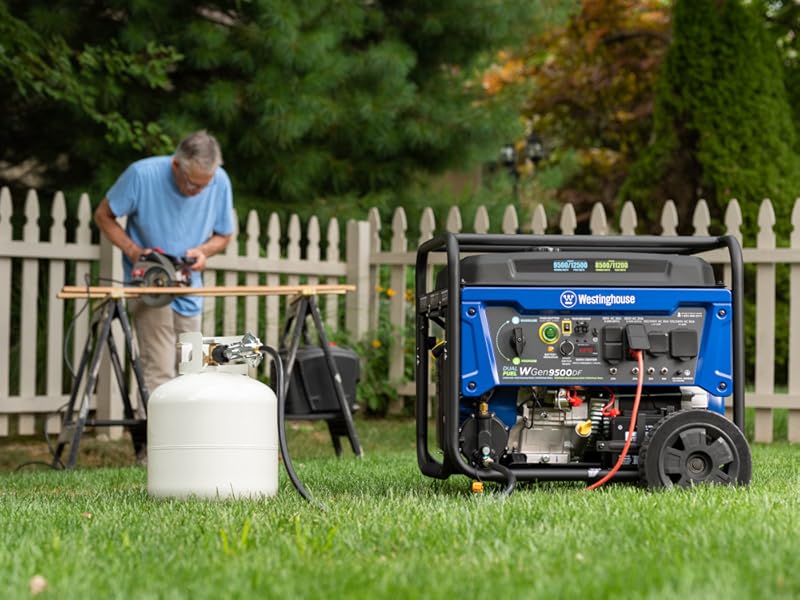
My name is Alex Miller, and I live in Houston, Texas. In this review, I will share my full experience and opinion about the Westinghouse 12,500-watt generator.
If you’ve ever gone through a major hurricane here, you already know why a serious generator isn’t a luxury — it’s survival gear. After losing power during a major storm, I decided I wasn’t going to be caught unprepared again.
That decision led me to the Westinghouse 12500‑Watt Dual Fuel Portable Generator (WGen9500DF), and after extensive use, testing, and research, here’s the most complete, no‑nonsense review you’ll find.
Quick Overview
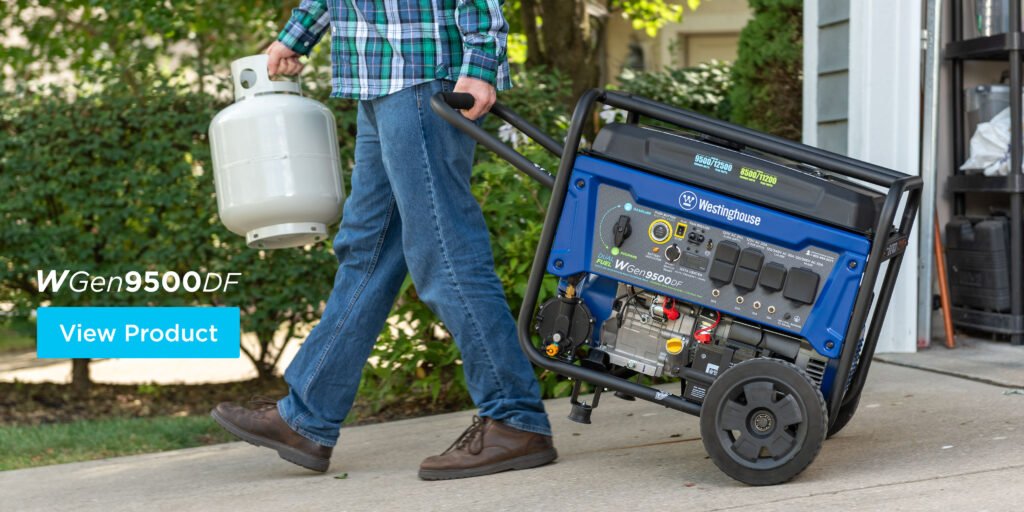
Running Watts: 9,500 (Gasoline) / 8,500 (Propane)
Peak Watts: 12,500 (Gasoline) / 11,200 (Propane)
Fuel Type: Gasoline & Propane (Dual Fuel)
Engine: 457cc Westinghouse 4‑Stroke OHV
Fuel Tank: 6.6 gallons
Runtime: Up to 12 hours at 25% load
Noise Level: ~90–92 dB
Weight: ~210 lbs
Warranty: 3‑Year Limited + Lifetime Technical Support
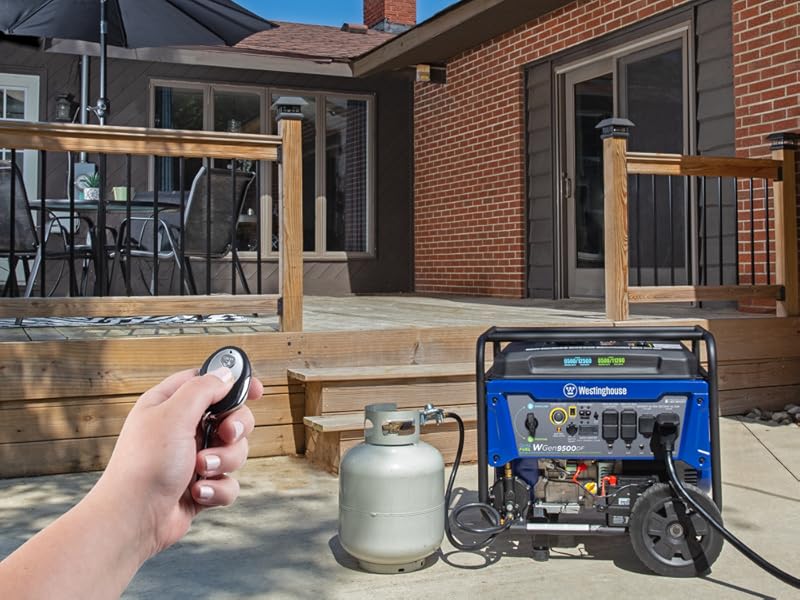
It operates on gasoline or propane, features a push-button electric start with remote key fob, and includes built-in safety features like a fuel gauge, low-oil shutdown, and GFCI outlets.
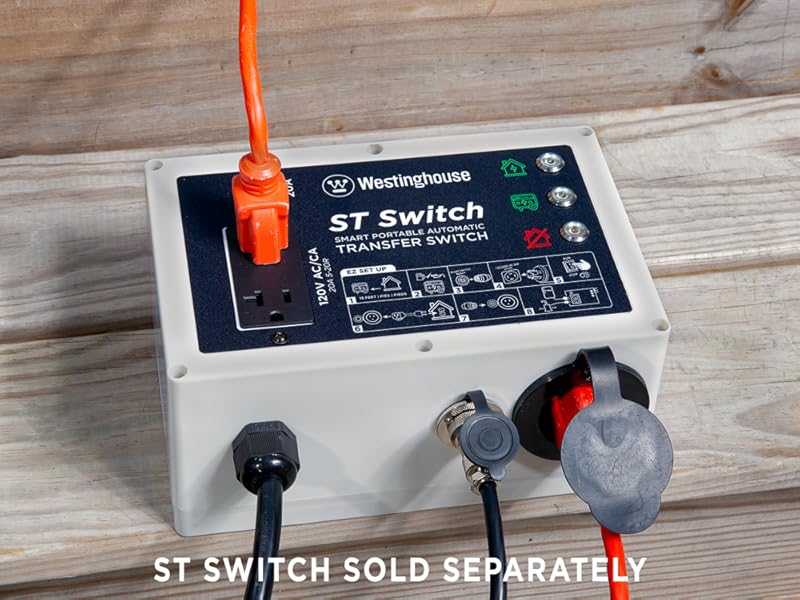
The Transfer Switch Ready L14-30R and RV-ready 14-50R outlets make it easy to power large appliances, homes, RVs, and worksites.
A VFT data display provides real-time voltage, frequency, and hour tracking. With never-flat wheels, a folding handle, and a lift bracket, it’s fully portable and ready for any emergency or project. Backed by a 3-year limited warranty and lifetime technical support.
Why I Chose This Generator
I originally looked at whole‑home standby generators like Generac.
They’re great — but they cost 5–10× more once installation is included.
The Westinghouse gives you nearly the same real‑world capability when paired with a manual transfer switch, at a fraction of the price.
With the right setup, this generator can power:
- Refrigerator & freezer
- Central or portable A/C (load‑dependent)
- Furnace
- Well pump
- Lights & outlets
- Garage door openers
For most households, this is more than enough during outages.
Real Testing Experience (My Personal Use)
I didn’t just buy this generator and write about specs — I tested it the way most homeowners actually use it.
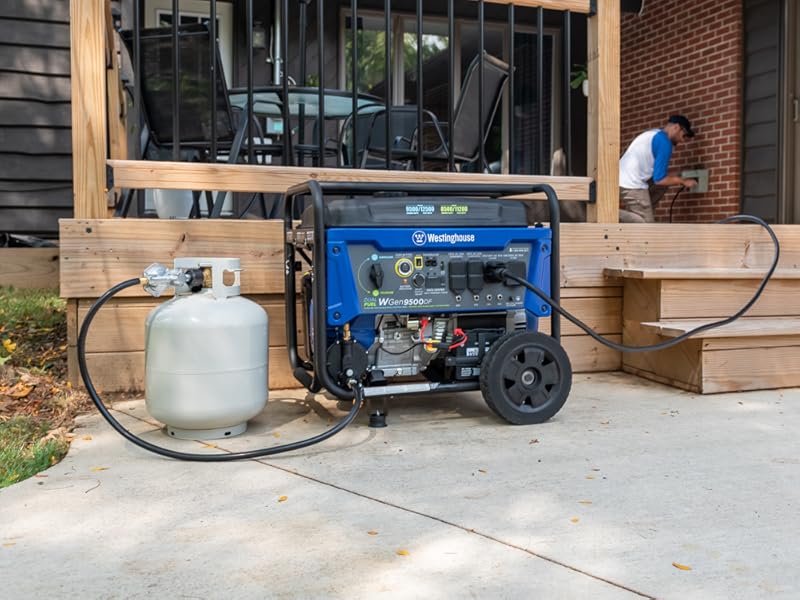
During outages and planned test runs, I connected the generator to a manual transfer switch and powered:
- A full-size refrigerator
- A chest freezer
- Furnace blower
- Several lights and outlets
- Garage door opener
- Portable A/C unit
What Worked Really Well
Startup reliability: Every test start was smooth. Cold starts, warm starts, gasoline or propane — no hesitation.
Load handling: Even when the fridge and A/C kicked on at the same time, the generator didn’t bog down.
Voltage stability: The digital display stayed steady, which tells me the AVR is doing its job.
Remote start: This sounds like a luxury until you use it in bad weather — then it feels essential.
Real-World Power Feel
On gasoline, the generator feels strong and confident. You can hear the engine respond to load changes, but it never feels strained.
On propane, power is slightly reduced, but still more than enough for essentials. For emergency use, propane performance impressed me more than expected.
Power & Performance
This generator delivers serious power. On gasoline, the 9,500 running watts handle multiple high-draw appliances without struggling. Peak power easily absorbs startup surges from refrigerators, pumps, and A/C units.
On propane, output drops slightly — which is expected — but it still runs essential household systems smoothly. I personally prefer propane for long-term storage because:
It doesn’t go bad like gasoline
Burns cleaner (less carbon buildup)
Requires less maintenance
Easier & safer to store long-term
Dual Fuel Flexibility (Big Advantage)
Dual fuel capability is not a gimmick — it’s one of the biggest strengths of this generator.
Gasoline Pros:
Higher power output
Easy availability during normal conditions
Propane Pros:
Cleaner combustion
Longer engine life
No fuel stabilizers needed
Perfect for emergency storage
Switching fuels is simple, and the generator handles both reliably.
Starting Options (Excellent)
Westinghouse nailed it here. You get three ways to start:
Remote Start (Key Fob) – Start it from inside your house
Electric Push‑Button Start
Recoil Pull Start (backup if battery dies)
Even after sitting unused for weeks, the generator fires up without hesitation.
Control Panel & Outlets
The control panel is well‑designed and beginner‑friendly:
4× 120V 20A household outlets (GFCI protected)
1× L14‑30R 30A (Transfer‑Switch Ready)
1× 14‑50R 50A (Full‑power output, RV & home backup)
Each outlet has its own breaker, which adds an extra layer of safety.
The VFT Digital Display shows:
Voltage output
Frequency
Lifetime run hours
This is extremely useful for maintenance tracking.
Noise Level (Let’s Be Honest)
I want to be very clear here — this is not a quiet generator, and that’s okay as long as you understand what you’re buying.
~90 dB on propane
~92 dB on gasoline
In real use, it sounds very similar to a lawn mower or pressure washer. You’ll hear it, and so will your neighbors. During my testing, placing it 25–30 feet away made the noise manageable inside the house.
What I like:
Sound is consistent, not rattly or metallic
No unusual vibrations
What I don’t like:
Not suitable for quiet neighborhoods at night without planning
Build Quality & Portability
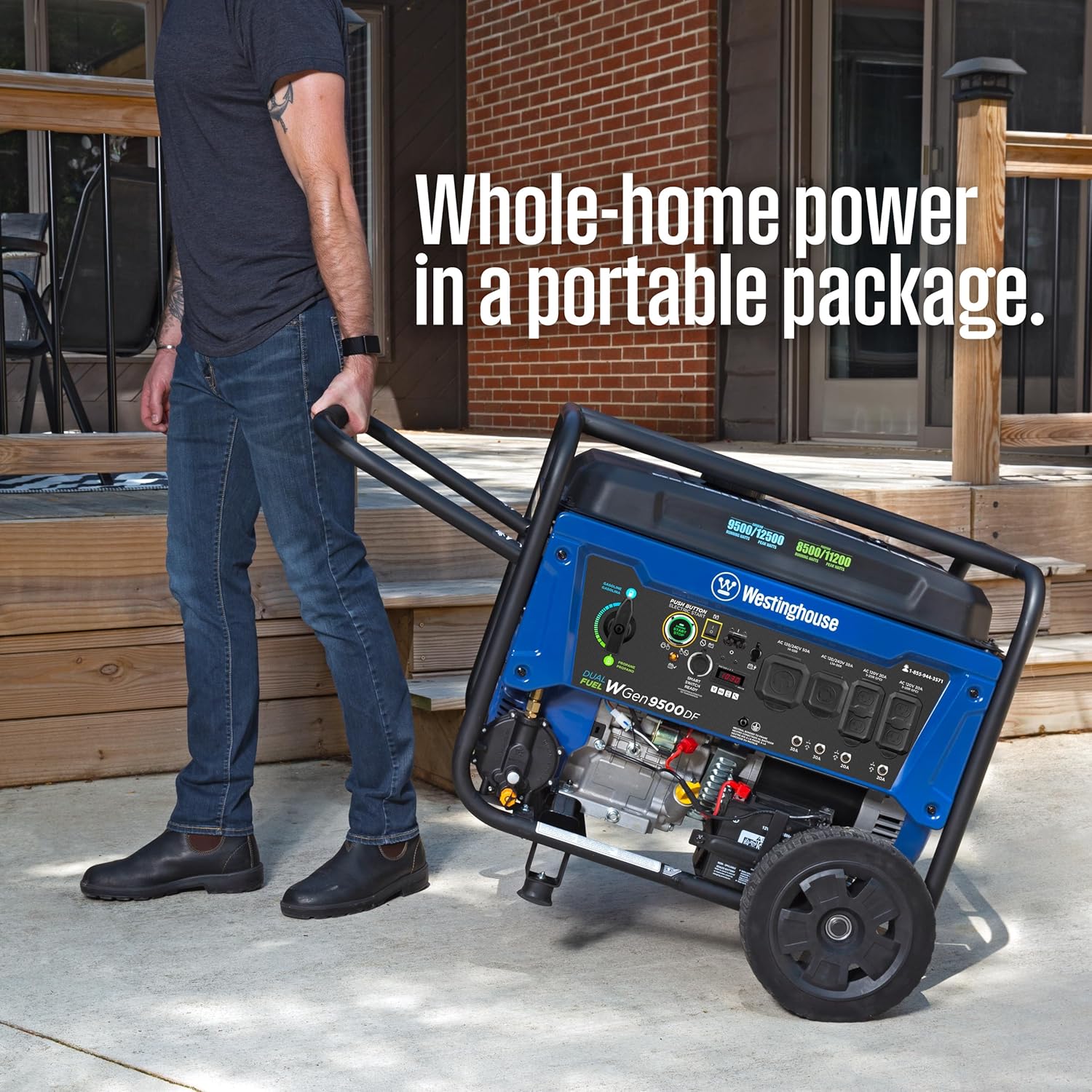
This thing is built like a tank.
Heavy steel frame
Durable never‑flat wheels
Fold‑down handle
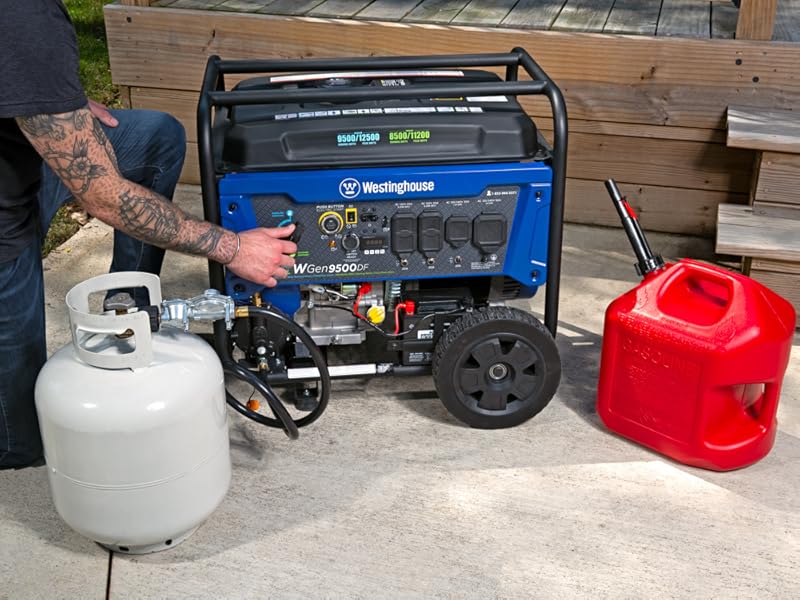
Yes, it’s heavy. You won’t lift it alone. But once on the wheels, it’s surprisingly easy to move, even on uneven ground.
Despite its power, storage is compact — it fits neatly in a garage without taking over the space.
Assembly & Setup
Setup is refreshingly simple:
Install wheels & support feet
Add included oil
Connect battery terminals
Add fuel
Total time: 20–30 minutes.
The printed manual is clear, well‑labeled, and beginner‑friendly — something many brands overlook.
Maintenance & Longevity
Maintenance is straightforward:
Oil changes every ~50–100 hours
Air filter cleaning (especially in dusty environments)
Fuel filter replacement (gasoline use only, ~100 hours)
If storing with gasoline, always run the tank empty or use fuel stabilizer. Propane users can largely skip this concern.
What I Like & What I Don’t (Honest Take)
What I Like
Extremely reliable starts
Strong power under real household load
Dual fuel is genuinely useful, not a gimmick
Remote start saves time and effort
Excellent value compared to standby systems
What I Don’t Like
Heavy — you need wheels or help
Loud, especially under high load
Uses fuel quickly at high output
None of these were deal-breakers for me, but they’re important to know before buying.
Comparison: Westinghouse vs Generac vs Champion
When people shop for a generator in this power range, Generac and Champion almost always come up. Here’s a clear, real‑world comparison based on cost, capability, and practicality.
Westinghouse vs Generac (Whole‑Home Standby)
Generac Standby Generators are excellent — but they are a completely different category.
| Feature | Westinghouse 12500W | Generac Standby |
|---|---|---|
| Purchase Cost | Much lower | Very expensive |
| Installation | DIY / Electrician | Professional only |
| Fuel | Gasoline / Propane | Natural Gas / Propane |
| Portability | Yes | No (Permanent) |
| Power Control | Manual Transfer Switch | Automatic |
| Maintenance Cost | Low | High |
Bottom line: If you experience frequent outages and want fully automatic backup, Generac makes sense. But for most homeowners, the Westinghouse delivers 90% of the real‑world functionality at a fraction of the cost.
Westinghouse vs Champion (Portable Generators)
Champion makes solid generators, but when you compare similar wattage models, Westinghouse pulls ahead in several areas.
| Feature | Westinghouse 12500W | Champion 10000–12000W |
| Engine Size | 457cc | Smaller on most models |
| Remote Start | Included | Not always included |
| Transfer Switch Ready | Yes | Model‑dependent |
| Build Quality | Heavy‑duty steel | Good, slightly lighter |
| Price‑to‑Power Ratio | Excellent | Good |
Bottom line: Champion is reliable, but Westinghouse offers more power, stronger engine, and better home‑backup features for the money.
My Honest Opinion After Using It
After real testing and actual outage use, I trust this generator. It does exactly what it promises: keeps the house livable when the grid goes down. It’s not fancy, and it’s not quiet, but it’s dependable — and that’s what matters most in emergencies.
I would buy it again, and I’ve already recommended it to friends and family who want serious backup power without spending standby-generator money.
Final Verdict
If you want maximum power without the massive cost of a standby system, the Westinghouse 12500‑Watt Dual Fuel Generator is one of the smartest buys available today.
Shop now the best-selling Westinghouse 12500-Watt Dual Fuel generator with good price on amazon.